There are no items in your cart
Add More
Add More
| Item Details | Price | ||
|---|---|---|---|

Since 2006, U.S. Law Prep℠ has been America’s first and original online law school preparation program, with more than 22,000 views.
This summer’s program ends on September 30th.
(Get Started Before Your Classmates)
Prepare this summer for law school this fall!
Every great journey starts with readiness and the right mindset.
Equip yourself with knowledge and strategies before you begin.
Take the first step today, your preparation starts here.
Your first year of law school is the most important. It sets the tone for your entire law school career. We want to help you to prepare yourself to meet that challenge. Here is part of Torts Lecture 5 regarding negligence. It discusses the famous case of Palsgraf v. Long Island Rail Road.
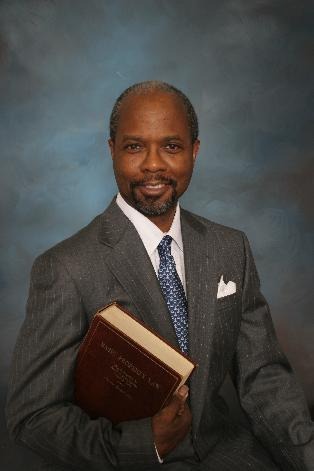
Hwesu Samuel Murray
The following are the basic courses that a student should expect to study during the first year of law school. This program provides students with a general overview of these courses.
Civil Procedure
This course introduces law students to the basic lawyer's practice of civil litigation. Civil Procedure examines the fundamentals of how the litigation system works. The basic elements include: parties, pleadings, discovery, trials, judgments, and many other elements of lawsuits. The course also focuses on the general goals of dispute-resolution, and demonstrates the rules under which the system serves the goals of justice.
Contracts
The basic Contracts course is generally concerned with the formation, implementation and enforcement of agreements. It explores the process of bargaining, breach, remedies available for breach, and many other issues. The types of contracts at issue may include those for the sale of goods, the sale of land, employment, construction, or for other purposes.
Criminal Law
Criminal Law courses focus upon the culpability for illegal acts. In general, such courses include discussions regarding criminal law enforcement in relation to society at large. The power of the Constitution over the police in gathering evidence, and the method of adjudicating criminal cases, are also key components of the courses. In addition, some studies include criminal law in the context of globalization, including criminal law in the age of terrorism.
Property Law
Property Law courses are surveys of the means by which property and property interests are enabled and protected. Such courses generally include the study of law regarding land, personal property, and, to some degree, intellectual property. There are also discussions regarding present and future interests. Other areas may include: landlord and tenant matters; joint ownership of property; bailment; easements; land use; water rights; nuisances; gifts; conveyances of land; and, a wide range of other matters pertaining to tangible and intangible property.
Torts Law
Torts Law is the study of the operation of law when harm has been done. There are various types of civil wrongs, and failure to perform public duty, encompassed by Tort Law. Generally, torts arise from encounters among persons resulting in injury for which redress is sought.
Outlines of subject matter regarding the five, basic, first-year of law school courses: Civil Procedure, Contracts, Criminal Law, Property Law, and Torts. The outlines feature cases that are the subjects of the corresponding lectures.
Detailed lectures for each course providing insight into the purpose of the case being discussed. Lectures by New York attorney,
Hwesu Samuel Murray
Eleven subjects - Five hours and 44 minutes
THE LAW SCHOOL METHOD ℠ - Preparation For Success
(Five Lectures - 34 minutes)
An overview of how law school differs from college.
Civil Procedure
(Six Lectures - 47 minutes)
The basic lawyer's practice of civil litigation.
Contracts
(Nine Lectures - one hour and 6 minutes)
Formation, implementation and enforcement of agreements.
Criminal Law (Six Lectures - 42 minutes)
Culpability for illegal acts.
Property Law (Six Lectures - 38 minutes)
Property and interests in property.
Torts Law (Seven Lectures - 30 minutes)
Operation of law when a person is harmed.
How To Read and Brief Cases (Three Lectures - 12 minutes)
How To Prepare For Class (Three Lectures - 16 minutes)
How To Prepare A Course Outline (Four Lectures - 18 minutes)
How To Prepare For Exams (Three Lectures - 14 minutes)
How To Take Exams (Four Lectures - 21 minutes)
Review of Cases
Outlining of Cases
Preparation For Class
Preparation For Exams
Taking Exams
Law school is very different from college. That difference can make or break your career. You want to be prepared to face the challenge of law school before you start. The mission of U.S. Law Prep℠ is to help you to face that challenge. U.S. Law Preparatory, Inc. is not a law school. This program is not intended to teach, does not teach, and U.S. Law Preparatory, Inc. does not represent or warrant that it teaches the law of any jurisdiction. Rather, this program is intended to provide the viewer with tips and insights regarding the law school experience.
*Convenience: as easy as watching Internet Television; available 24-hours per day, seven days per week, at any place in the world reached by the Internet. It's always at your fingertips. *Control: you control the courses. You can play and replay the lectures when you choose, where you choose, as often as you choose, for weeks. You can actually prepare for law school while traveling on vacation, during your lunch break, or at home at any time of the day or night.
 Launch your Graphy